Why Data Center Opposition Got Organized, and What Actually Changes Minds
In under a year, data centers went from an issue the public was split on to one most Americans oppose near their homes. The movement behind that shift is now organized and connected, and it is winning. Here is how that happened, and what the research says about changing minds.
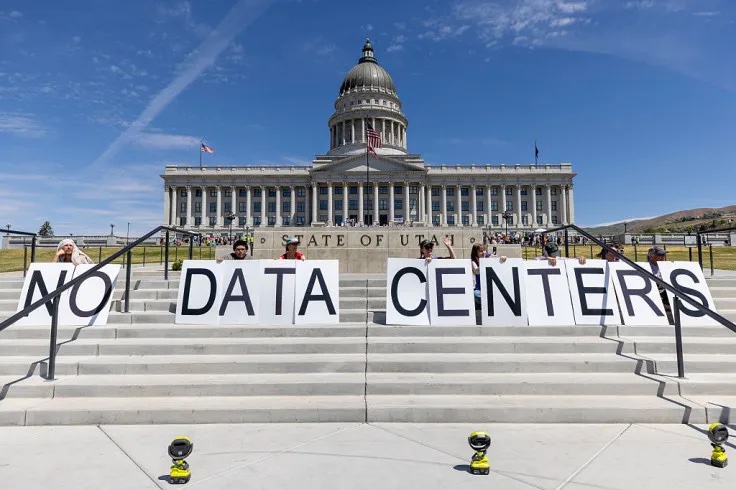
In September 2025, Americans were evenly split on whether they would want a data center built near their home. By May 2026, seven in ten said they would oppose one. Between December and June, the number of local groups organized against data center projects more than doubled. Statehouses filed hundreds of bills, and by October the investment canceled this year had passed a quarter of a trillion dollars.
The shift has organization behind it, and it is showing up in outcomes. This piece looks at how the opposition organized, what it is actually angry about, why it keeps winning, and what the research says changes people's minds about a project in their community.
How fast did public opinion turn against data centers?
Public opinion on local data centers swung 49 points in nine months. In a Heatmap Pro poll conducted by Embold Research, 43 percent of registered voters supported a data center near their home in September 2025 and 42 percent opposed it. By May 2026, support had fallen to 21 percent and opposition had risen to 71 percent, with 55 percent strongly opposed. No region came in below 69 percent opposition.
Other pollsters found the same thing with different questions. Gallup, asking about AI data centers for the first time in March 2026, found 71 percent opposed to one in their area, against 53 percent opposed to a nuclear power plant in the same survey. The Yale and George Mason climate communication programs found 56 percent opposed and 15 percent in support in April 2026, with many respondents still undecided.
Familiarity hasn't helped. In a January 2026 Pew Research Center survey, people who had heard a lot about data centers were far more likely than those who had heard a little to say the facilities are mostly bad for home energy costs (67 percent against 42 percent) and for quality of life nearby (51 percent against 35 percent). The people most familiar with data centers are the most negative about them.
How did local opposition become a national movement?
It scaled from single-project neighborhood groups into a connected network with national coalitions and statehouse campaigns. Data Center Watch describes the starting point: small groups with no legal structure that form around one proposed project and work through letter-writing, public comment, petitions, and social media. Alongside them are local chapters of national groups like the Sierra Club and Clean Water Action, which have paid staff and can afford to sue.
Northern Virginia showed early how those pieces connect. The Data Center Reform Coalition, founded in 2023, coordinates 41 environmental, conservation, and homeowner organizations across the region. That model has since spread. Data Center Watch counted 396 active opposition groups at the end of 2025, 833 at the end of March 2026, and 843 across 49 states by mid-year.
The movement now operates at every level of government. In June 2026, more than 500 organizations signed a letter to Congress calling for a nationwide moratorium on new hyperscale data centers, and launched a national coalition to support local and state fights. In statehouses, more than 300 data center bills were filed in the first six weeks of 2026, and statewide moratorium proposals were introduced in 14 states, according to Data Center Watch. Maine came within one House vote of a statewide ban.
What are opponents actually angry about?
Resource use comes first, followed by quality of life, money, and the way projects get approved. When Gallup asked opponents to explain their position in their own words, the answers broke down this way:
| Reason given by opponents | Share |
|---|---|
| Water use | 18% |
| Energy use | 18% |
| Pollution, including noise | 16% |
| Local quality of life: growth, traffic, preferred land use | About 1 in 5 |
| Economic costs: utility bills, cost of living, use of taxpayer funds | About 1 in 5 |
| Concerns about AI itself | The remainder |
The electricity concern has a hard number behind it. PJM's independent market monitor found that data center demand added about $9.4 billion to capacity costs in the 2025/2026 auction on the largest grid in the country, and described the tight market as almost entirely the result of large load additions from data centers. Those costs flow to household bills, and 59 percent of Americans in the Yale and George Mason survey expect their bills to rise if a data center opens nearby.
Secrecy turns those concerns into anger. Developers routinely ask local officials to sign nondisclosure agreements during early negotiations, and residents often learn about a project only after the deal is nearly done. An environmental sociologist at the University of Mary Washington found NDAs in at least 25 of 31 Virginia data center projects he and a colleague surveyed. In Louisiana, the contracts behind one project, code-named Project Lightning and Project Pixel, barred releasing information to the public. Pennsylvania's governor has since banned NDAs on data center projects at the agencies he oversees, and several states have bills to do the same.
Why does organized opposition keep winning?
It wins because it has learned to use procedure, elections, and local permitting, all of which favor whoever shows up. The clearest example is the Prince William Digital Gateway, a planned 23 million square foot data center complex on about 2,100 acres beside Manassas National Battlefield Park. Residents sued over the 2023 rezoning, and in March 2026 the Virginia Court of Appeals upheld a ruling voiding it because the county had failed to meet public notice requirements. The last developer abandoned the project in July.
Elections have become the second tool. In November 2025, Georgia voters removed two incumbent members of the Public Service Commission in a campaign fought over power bills and the data centers driving demand. They were the first Democrats to win a nonfederal statewide race in Georgia in nearly 20 years, which is the kind of result officials in both parties notice.
The cumulative effect shows up in outcomes. Heatmap Pro counted at least $260 billion in data center investment canceled in 2026 after sustained local opposition, and found that about half of all projects meeting local backlash this year were ultimately canceled. Most failed to get a local permit or ran into hostile action from local government.
What actually changes people's minds?
The strongest evidence points to process: residents who see a developer as open, and who believe they can affect the outcome, judge a project more favorably. The best-studied comparison is wind farm neighbors, the closest parallel of a large, visible facility arriving in a community that didn't ask for it. A Lawrence Berkeley National Laboratory survey of 1,705 people living near U.S. wind projects found that an open and transparent developer had the largest effect on whether residents saw the process as fair. Transparency and the ability to influence the outcome were both tied to more positive attitudes toward the project, even after accounting for concerns about appearance and noise.
The data center polling suggests what residents want that process to produce:
- Paying for its own power. In the Yale and George Mason survey, 73 percent supported requiring new data centers to offset their electricity use, for example by funding rooftop solar or weatherization for nearby homes. Microsoft's Community-First AI Infrastructure commitments in January 2026, including rate structures that keep data center costs off residential bills and full local property taxes, were built around this concern.
- Commitments in writing. When St. Louis approved a contested data center in April 2026, the approval came with closed-loop cooling, a requirement that at least half its energy be renewable within five years, about $15 million toward greenway and street improvements, and a pledge not to seek tax abatements. Opponents still faulted the transparency and public notice, which is the process lesson again.
- Honest numbers on jobs and taxes. Jobs are the main reason supporters give: 55 percent of Gallup's supporters cited job opportunities. Pew found more Americans see data centers as good than bad for local jobs and tax revenue, the only two of the five areas it asked about where that is true, so overstating either one wastes the strongest argument a project has.
- A building that fits. About one in five opponents in Gallup's survey cited local quality of life and land use, and 30 percent of all Americans in Pew's survey said data centers are mostly bad for quality of life nearby. Fewer than one in ten said mostly good.
Concessions made after the fight starts rarely convert anyone. In Indianapolis, DC Blox cut a planned campus from three buildings to two and halved its diesel generators after neighbors pushed back. The city's development commission approved it 6 to 1 in July 2026 while protesters gathered outside. The project went forward, and the opposition didn't go away.
What does this mean for a developer?
It means the community case has to be built before the plan is fixed, not defended after it is announced. Projects that reach a hearing as a finished plan, negotiated under NDA and presented with a jobs number, are walking into an organized network that knows the procedural rules, has watched other projects stall, and now has majority public opinion behind it.
What the evidence supports is unglamorous. Show the project early, while changes are still possible. Put commitments on power, water, and noise in writing. Give honest numbers. Treat the building's appearance as part of the case, because it is the impact every neighbor sees every day, long after the hearing is over. Counties have started writing that expectation into their facade rules for data centers, and a building that reads as designed for its place answers one of the objections before anyone raises it.