Why $64 Billion in Data Center Projects Stalled — and What the Killed Ones Had in Common
Community opposition has blocked or delayed $64 billion in U.S. data center projects. The ones that died weren't killed by cost, and usually not by the benefit package either. They had something else in common.
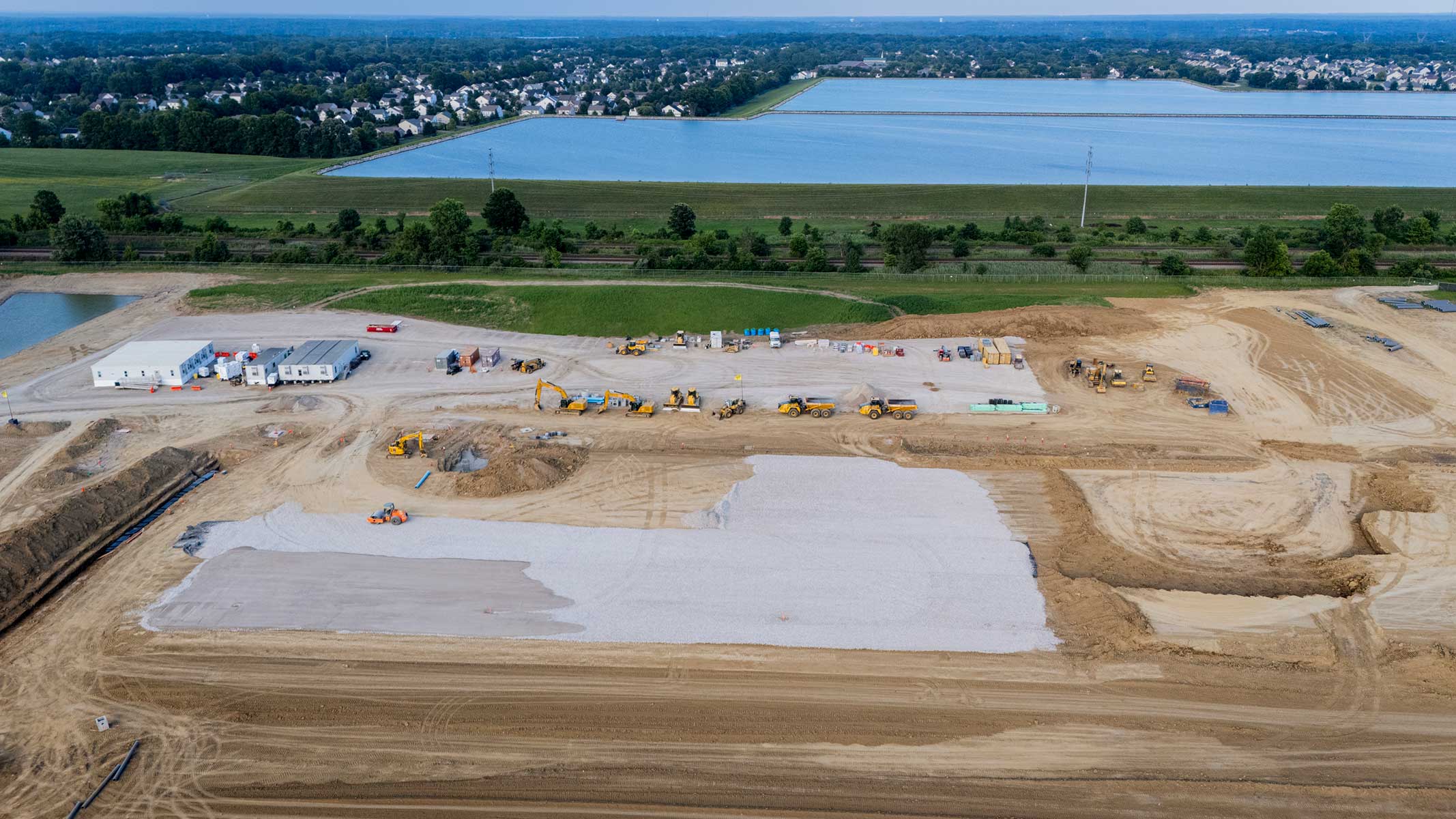
The headline number is $64 billion. That's how much U.S. data center development has been blocked or delayed by community opposition, according to a report from Data Center Watch that tracked activity from May 2024 through March 2025. Read past the total, and the projects that died turn out to have something in common that most developers don't plan around.
The assumption is that these projects fail on economics, or power, or water, and some of them do. But the ones killed by their own communities tend to fail in a more consistent way, over something the developer had treated as a secondary concern.
What the $64 billion is made of
Of the $64 billion, about $18 billion was canceled outright and roughly $46 billion was delayed, and the delayed share is easy to underrate. A project that slips two years in an established market can miss the power-availability window it was underwritten against, and a stalled data center often becomes a dead one without anyone formally killing it.
Data Center Watch assembled the figure by tracking activist activity across 28 states with hyperscale projects in planning, drawing on local media, government filings, petitions, and public statements. They counted at least 142 organized opposition groups across 24 states as of early 2025, a number that has kept rising since rather than settling back down.
It is bipartisan, which is why it doesn't blow over
Most local land-use fights break along predictable partisan lines, and this one doesn't. Among elected officials opposing large projects in the Data Center Watch data, 55 percent were Republican and 45 percent were Democrat. Polling has put data center opposition among the few issues where Republicans, Democrats, and independents land in the same place.
For a developer's risk model, the absence of a partisan split is the dangerous part. A partisan issue tends to swing back when the other side wins an election, while an issue that unites everyone just sits there and compounds, because no election clears it.
The vote doesn't end when the vote ends
Winning the approval, it turns out, is not the end of the exposure. In Warrenton, Virginia, the town council approved an Amazon data center on a 4-3 vote in 2023. Over the next two years, voters replaced every member who had backed it. The incoming council called the result a referendum on Amazon and set out to block the project its predecessors had already approved.
The same thing has happened elsewhere. In Utah, a state senate president lost a primary after backing a data center near the Great Salt Lake. In Cascade Locks, Oregon, voters recalled two port commissioners over a data center negotiation. One defeated official put it bluntly to Newsweek.
Do I think that the data center vote cost me the election? Yes I do.
A blank building the size of four football fields doesn't fade into the background after the ribbon-cutting. It sits there, visible from the road, every day, as a standing reminder of who voted for it. That is what turns a single approval into a multi-year liability, and the developers who come back to the same jurisdiction for later phases are the ones who feel it hardest.
Money didn't save the ones that died
The standard answer to opposition is a bigger check: more community benefit funds, more open space, more concessions. It often isn't enough. In Hanover County, Virginia, an applicant arrived with a generous community-benefit package and more than 40 percent open space, and the Board of Supervisors denied it 4 to 3 anyway.
Loudoun County, the largest data center market in the world, shows the same thing from the other side. When it approved a project after its 2025 ordinance change, the approval only came once the developer agreed to cut the building's square footage. What finally moved the vote was a reduction in the building's size, not a larger check.
Siting was the variable that actually moved
The clearest lesson comes from a project that failed and then succeeded. In 2024 the developer Tract withdrew a $14 billion campus planned for Goodyear and Buckeye, Arizona, after the two cities pushed back on a site they called incompatible with the surrounding neighborhoods. A few months later, with the same company and the same capital behind it, Tract returned with a revised plan near the Buckeye airport, on land that read as industrial rather than residential, and won local support after real community engagement.
Nothing about the economics changed between the failure and the win. What changed was where the building went and how early the developer worked with the people who'd live near it. The projects that died tended to share the opposite profile: a large industrial building dropped into, or beside, land people thought of as theirs, presented as a finished plan, with engagement starting only after the neighbors had already organized.
What the killed ones had in common
Looked at together, the failures line up. The projects that died weren't the most expensive or the most power-hungry ones. They were the ones that showed up as a large, blank, industrial object in a place that had already formed an image of itself the building didn't fit, and asked for a yes before the community felt heard.
The ones that survived did one of two things. Some moved the building onto land that already read as industrial. Others reduced how much it imposed on the people who would have to look at it, through its size or the way it met the street rather than through a larger community-benefit offer. Either way, what changed was the building's compatibility with the place around it.
Where this leaves a developer
The entitlement risk on a data center used to be mostly a question of land and power. Design and timing now belong in that same category. A building's size, its blankness, and how it reads from the nearest road have become real inputs to whether the project gets approved, whether that approval survives the next election, and whether the jurisdiction stays open to the phases that come after.
None of this makes opposition disappear. But the record is fairly clear about which projects get through it. They are the ones that treated the building as something a community has to live next to, and designed for that, before anyone had to be talked into it.